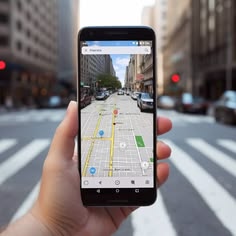
Google Maps has traditionally been one of the simplest technology products to understand: enter a destination, get directions and start moving.
That is changing.
Google is turning Maps into something closer to an AI-powered personal assistant, introducing new capabilities that can help users complete tasks such as ordering food, finding hotels and discovering events through conversational requests.
The changes centre around Ask Maps, Google’s conversational AI experience inside Maps. Rather than relying entirely on traditional searches, users can describe what they want in ordinary language and allow the system to identify suitable places and, in some cases, take action on their behalf.
For example, a user could ask for a nearby restaurant that serves a particular meal and then use the service to place an order. Google is also expanding capabilities around hotel discovery and event tickets.
That represents an important change in the role of mapping applications.
For years, digital maps have primarily helped people answer the question, “Where is it?” Increasingly, Google wants Maps to answer a much broader question: “What should I do, and can you help me do it?”
The company is also connecting Ask Maps with other information. Google’s Personal Intelligence features can use relevant information from services such as Gmail and Calendar to provide more personalised recommendations, although users have control over whether those connections are enabled.
Google is simultaneously expanding other Maps features, including real-time public transport information and broader availability of its conversational mapping tools.
The move is part of a wider industry shift towards what is often called “agentic AI”. Instead of simply generating an answer, an AI agent can help carry out a task involving several steps.
That distinction could become increasingly important.
A conventional search might tell someone which restaurants are nearby. An AI-powered Maps experience could potentially find the restaurant, check whether it has the requested food, place an order and help the customer navigate there.
For businesses, the change could be just as significant. Being visible on Google Maps may increasingly mean being understandable to an AI system rather than simply appearing in a list of search results.
Restaurants, hotels, entertainment venues and other local businesses will have to think about how their information appears when customers interact with AI-powered search.
Google Maps is therefore becoming more than a digital map. It is evolving into another battleground where technology companies are attempting to move AI from answering questions to actually helping people get things done.