For a long time, technological innovation was often associated with making existing things faster, smaller or more convenient.
A faster phone.
A better app.
A more efficient way to shop, communicate or travel.
Those things still matter. But the next wave of innovation appears to be focused on something bigger: solving problems that have consequences far beyond individual consumers.
From climate change and healthcare to energy, food production and transportation, technology is increasingly being developed around challenges that governments, businesses and communities cannot afford to ignore.
The question is no longer simply whether technology can make life more convenient.
It is increasingly whether innovation can help solve problems that have resisted traditional solutions.
Innovation Is Moving Into the Real World
Much of the technology boom of the last decade happened online.
Social media platforms grew rapidly. Mobile apps became part of everyday life. Businesses moved their services online.
The next phase is becoming more physical.
Innovation is now increasingly focused on the systems that power everyday life.
Companies and researchers are working on new forms of energy storage, electric transportation, robotics, advanced manufacturing, biotechnology and smart infrastructure.
These technologies may not always attract the same immediate attention as a viral app or the latest consumer gadget.
But their impact could be far more significant.
A new social platform can change how people communicate.
A breakthrough in energy storage could change how entire countries generate and consume electricity.
That difference is important.
The Rise of Deep Technology
One of the most interesting developments in innovation is the growing attention around what is often called deep technology.
Deep tech companies are typically built around scientific discoveries, engineering breakthroughs or advanced research.
Their products can take years to develop.
They often require specialised knowledge and significant investment.
And unlike many consumer technology companies, their success may depend on solving problems that cannot be fixed with software alone.
Examples include:
- Advanced robotics
- Quantum computing
- Biotechnology
- New materials
- Semiconductor technology
- Clean energy systems
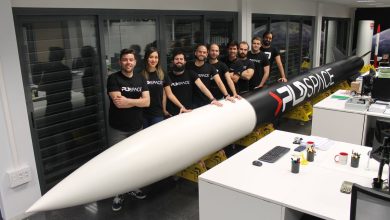
- Space technology
These industries may take longer to develop, but they also have the potential to create entirely new markets.
The innovation race is therefore becoming less about creating the next version of something that already exists.
Increasingly, it is about creating things that have never existed before.
Artificial Intelligence Is Becoming an Innovation Tool
Artificial intelligence is also changing how innovation happens.
AI is not only becoming a product that companies sell.
It is becoming a tool that researchers and businesses use to discover, design and develop new things.
Scientists can use AI to analyse large amounts of data.
Engineers can use it to test designs.
Healthcare researchers can use it to identify patterns that would be difficult for humans to detect.
This could significantly reduce the time required to move from an idea to a real-world application.
But it also creates an interesting possibility.
Some of the biggest AI breakthroughs in the coming years may not necessarily be new AI products.
They may be discoveries made possible because AI helped humans find them.
Innovation Is Becoming a Global Competition
Countries around the world are increasingly treating innovation as a strategic advantage.
The ability to develop advanced technologies can influence economic growth, national security and long-term competitiveness.
That is why governments are investing heavily in areas such as AI, quantum technology, semiconductors, clean energy and advanced manufacturing.
The competition is not simply about who can invent something first.
It is also about who can build the infrastructure, talent and investment systems needed to turn an idea into a successful industry.
A scientific breakthrough in a laboratory does not automatically create economic value.
It needs researchers.
It needs engineers.
It needs investors.
It needs manufacturers.
And eventually, it needs customers.
The countries and regions that can connect those pieces effectively may have a major advantage.
The Best Innovations May Be the Ones We Barely Notice
Not every important innovation arrives with a major product launch.
Some of the technologies that have the biggest impact become almost invisible.
Cloud computing is a good example.
Most people do not think about the infrastructure behind the apps and services they use every day.
They simply expect those services to work.
The same may eventually happen with emerging technologies.
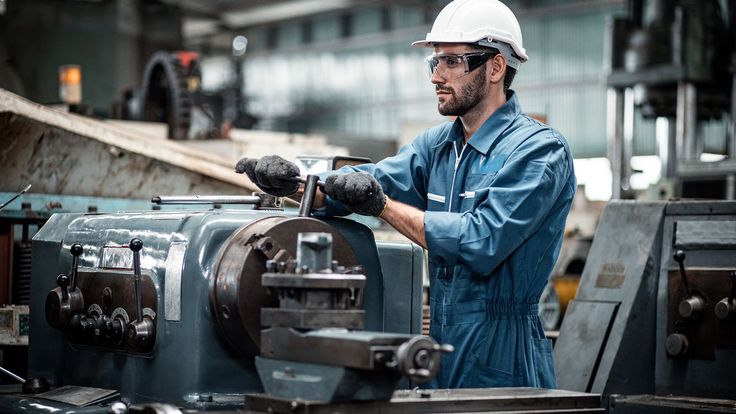
Advanced automation could quietly change manufacturing.
New battery technology could transform transportation.
AI could become deeply embedded in healthcare systems.
Smart infrastructure could change how cities manage energy and transport.
The technology may not always be visible.
The impact will be.
Innovation Needs More Than Ideas
It is easy to think innovation begins and ends with a brilliant idea.
In reality, an idea is only the beginning.
Many technologies fail not because they are useless, but because they cannot be produced at scale.
Others fail because they are too expensive.
Some struggle because governments have not created regulations capable of supporting them.
Others simply arrive before society is ready.
Successful innovation therefore depends on more than creativity.
It requires patience, investment and execution.
The most important ideas may take years before their real value becomes obvious.
The Future Will Be Built Around Difficult Problems
The next generation of technology companies may look very different from those that dominated the last decade.
Instead of asking how to keep people online longer, some of them may be trying to improve medical research, create cleaner energy or make industrial systems more efficient.
Those are more difficult problems.
They are also potentially more important.
Innovation is gradually moving towards a period where technological progress will increasingly be judged by what it can solve.
Convenience will always matter.
Entertainment will always matter.
But the technologies capable of addressing some of the world’s biggest challenges could define the next era.
The future of innovation may not belong to the companies asking, “What can we build?”
It may belong to the ones asking, “What problem is worth solving?”