For much of human history, scientific progress moved at a pace that could be difficult to notice within a single lifetime.
Discoveries took years to develop. Experiments could take months or even decades. New technologies often remained inside laboratories long before they reached the public.
Today, that process is beginning to change.
Advances in artificial intelligence, computing power, biotechnology and automation are giving scientists new tools to explore problems faster and in greater detail than before.
The result could be a new era in which scientific discovery and technological progress become increasingly connected.
The future may not simply be shaped by what scientists discover.
It may also be shaped by how quickly humanity becomes capable of discovering it.
Artificial Intelligence Is Entering the Laboratory
Artificial intelligence is already changing how businesses work, but its potential impact on science could be even more significant.
Scientific research often involves analysing enormous amounts of information.
Researchers may need to study complex biological systems, examine large datasets or test thousands of possible combinations before finding something useful.
AI can help accelerate parts of that process.
It can identify patterns in data, assist researchers in analysing information and help simulate possibilities that would otherwise require enormous amounts of time and computing power.
This could have major implications for fields such as:
- Medicine
- Drug discovery
- Climate science
- Physics
- Materials science
- Biology
The important point is that AI does not necessarily replace scientific thinking.
Instead, it could become another tool that helps scientists explore questions faster.
Some of the most important scientific discoveries of the future may therefore involve a combination of human curiosity and machine-assisted analysis.
Biotechnology Could Change What Is Possible
Another area moving rapidly is biotechnology.
Advances in genetics and biological engineering are allowing researchers to understand living systems in increasingly detailed ways.
This could transform healthcare.
Scientists are developing new approaches to treating diseases, designing more personalised medicine and creating technologies capable of detecting health problems earlier.
The potential extends beyond medicine.
Biotechnology could influence agriculture, food production and environmental sustainability.
Researchers are exploring ways to develop more resilient crops, improve food systems and create new materials using biological processes.
These developments raise important questions.
Just because science makes something possible does not automatically mean society is ready to use it.
The future of biotechnology will therefore depend not only on scientific capability but also on ethics, regulation and public trust.
The Energy Question Will Shape the Future
Technology is becoming increasingly powerful.
But powerful technology requires energy.
Data centres supporting AI require enormous amounts of electricity. Electric transportation depends on reliable energy systems. Modern economies are becoming more dependent on digital infrastructure every year.
Finding sustainable ways to meet that demand could become one of the most important scientific and technological challenges of the future.
Innovation in areas such as battery technology, renewable energy and energy storage may therefore become just as important as advances in software.
The future will not only be built by people writing code.
It will also depend on the scientists and engineers developing the systems capable of powering the technology that code creates.
Space Is Becoming More Accessible
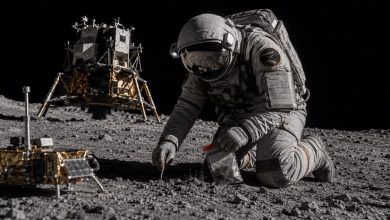
For decades, space exploration was largely controlled by governments and national agencies.
That is changing.
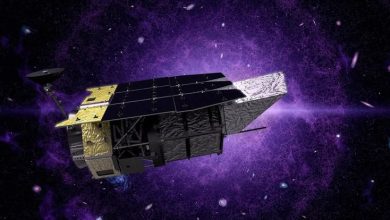
Private companies are becoming increasingly involved in satellite technology, launch systems and space exploration.
Smaller satellites are making it easier to collect information about the planet.
Space technology is also becoming increasingly connected to life on Earth.
Satellite systems support communication, navigation, weather monitoring and environmental research.
As access to space becomes easier, new industries could emerge around technologies that once belonged almost entirely to science fiction.
The future of space may not simply involve travelling further.
It may involve making space technology a more practical part of everyday life on Earth.
Science Is Becoming More Connected
One of the most interesting things about the future is that scientific fields are becoming increasingly connected.
AI can support biology.
Biology can inspire new materials.
New materials can improve energy technology.
Better computing can accelerate scientific research.
The next major breakthrough may therefore come from the point where different fields begin to overlap.
This is why the future may become increasingly difficult to predict.
The most important discovery may not come from a completely new field.
It could come from combining existing technologies in a way nobody expected.
The Future Will Bring Difficult Questions
Scientific progress creates opportunity.
It also creates responsibility.
Artificial intelligence raises questions about control and accountability.
Biotechnology raises questions about what humans should be allowed to modify.
Automation raises questions about the future of work.
Space technology raises questions about ownership and access.
The faster technology develops, the more important these conversations may become.
The future should not simply be shaped by what humans are capable of creating.
It should also be shaped by what humans decide is worth creating.
The Future Is Closer Than It Looks
It is easy to imagine the future as something distant.
Flying cars.
Cities on Mars.
Machines doing everything for humans.
But the future rarely arrives all at once.
It usually begins quietly.
Inside laboratories.
Inside universities.
Inside small technology companies.
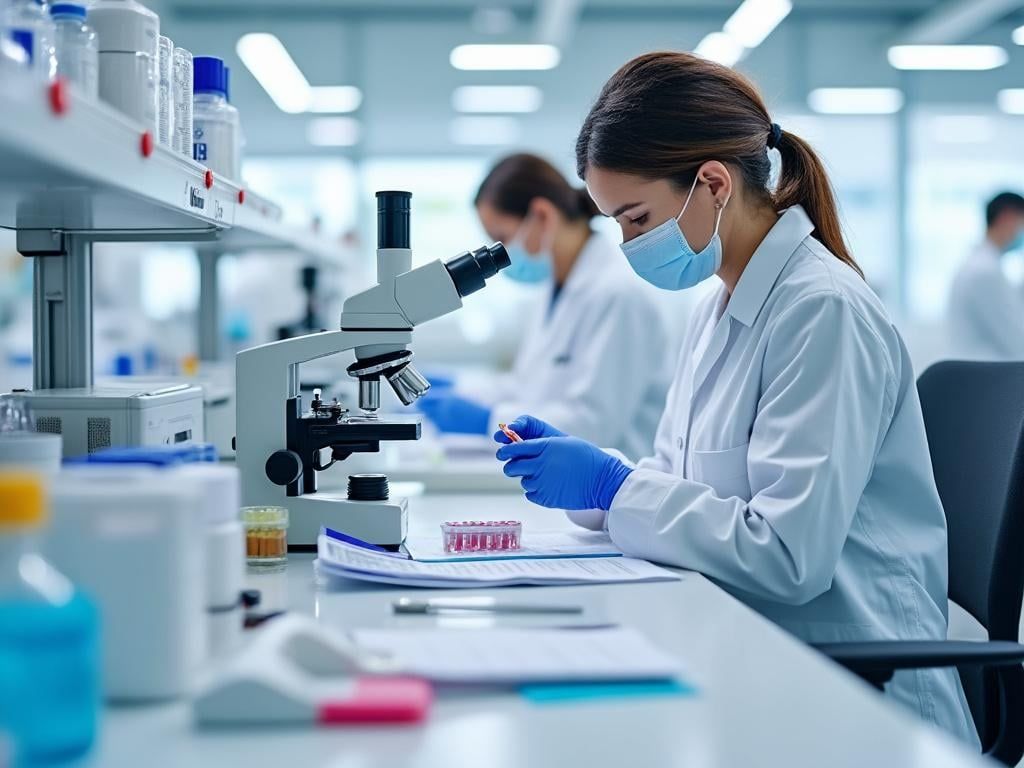
Inside research teams working on problems most people have never heard about.
By the time a breakthrough becomes part of everyday life, the work behind it may have been happening for years.
That is what makes this moment particularly interesting.
Science and technology are developing alongside each other at an extraordinary pace.
Some predictions about the future will undoubtedly be wrong.
Some technologies that seem revolutionary today will disappear.
But somewhere, right now, researchers are working on discoveries that could eventually change how people live.
The future is not waiting to happen.
In laboratories, workshops and research centres around the world, it is already being built.