French quantum computing company Pasqal made a strong debut on the Nasdaq this week, with its shares surging as investors continue to search for the companies that could define the next generation of computing.
Pasqal’s shares rose by as much as 73% during its first day of trading before settling around 40% higher. The company entered the public markets following a merger with Bleichroeder Acquisition Corp II, a deal that valued Pasqal at roughly $2 billion and provided approximately $360 million in cash to support expansion.
The strong debut is another sign that quantum computing is moving closer to becoming a major commercial technology story.
For decades, quantum computers have existed largely as research projects.
The machines use the unusual properties of quantum physics to process certain types of information differently from traditional computers.
The technology has the potential to become particularly useful for highly complex calculations involving areas such as materials science, financial modelling, chemistry and drug discovery.
But building a useful quantum computer remains extremely difficult.
Quantum systems are highly sensitive to their environment, and errors remain one of the industry’s biggest technical challenges.
That has not stopped governments and investors from pouring money into the sector.
Pasqal is one of Europe’s most prominent quantum computing companies.
It was co-founded by Nobel Prize-winning physicist Alain Aspect, whose research into quantum entanglement helped lay important foundations for the technology.
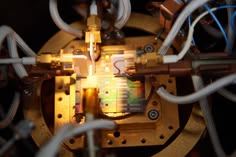
The company uses neutral atoms as the basis for its quantum processors and has focused on developing machines for specific commercial and scientific applications.
Pasqal has already deployed several quantum machines and has commercial relationships with customers including Saudi Aramco.
The company reported €16.5 million in revenue for 2025 and operates production facilities in France and Canada.
Its Nasdaq debut is particularly interesting for Europe.
Much of the global technology conversation is dominated by American and Chinese companies.
Quantum computing, however, has become an area where European research institutions and startups are attempting to maintain a stronger position.
Governments are also increasingly viewing quantum technology as strategically important.
A powerful future quantum computer could have implications for scientific research, industrial competitiveness and cybersecurity.
The possibility that quantum computers could eventually break some forms of existing encryption has already led governments and companies to invest in post-quantum cryptography.
The race is therefore about more than building faster computers.
It is also about who controls the technology that may influence the next generation of digital infrastructure.
Pasqal’s public market success comes at a time when artificial intelligence is also transforming investor interest in advanced computing.
The AI boom has created massive demand for chips, data centres and new forms of computing infrastructure.
That enthusiasm is now spreading towards quantum technology.
Investors are betting that some of today’s quantum companies could eventually become as important to specialised computing as major semiconductor companies are today.
Of course, significant challenges remain.
Quantum computing is still far from replacing traditional computers.
Most experts expect the technology to complement conventional and AI computing rather than replace them entirely.
The most important question is whether companies can identify valuable problems where quantum machines provide a meaningful advantage.
Pasqal’s public debut gives the company additional resources to pursue that goal.
And its strong first day on the Nasdaq suggests investors are willing to take the journey with it.
For the wider innovation sector, the message is clear.
The next major computing revolution may already be under construction.
It just happens to be happening at the atomic level.