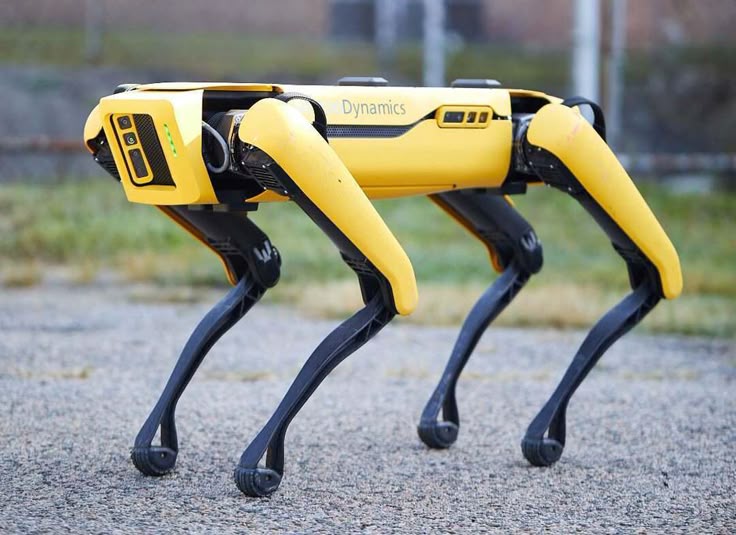
Robot dogs once looked like something reserved for science-fiction films and research laboratories.
Today, they are becoming a growing commercial technology business.
A recent Reuters investigation has highlighted how China’s rapid rise in robotics manufacturing has helped companies such as Unitree become major players in the global market for quadruped robots.
The investigation found that Unitree’s successful robot dog designs built on research and technology that had originally benefited from US military-funded research programmes. Much of the earlier work was publicly published, allowing other companies to legally build upon it and commercialise similar ideas.
The story illustrates an important reality about innovation.
Inventing a technology and successfully turning it into a mass-market product are not always the same thing.
The United States remains one of the world’s leading centres for scientific research and advanced technology development.
But China has increasingly demonstrated an ability to take emerging technologies and scale them into commercial products.
Unitree’s robot dogs are an example.
The company’s Go2 robot has become one of the most recognisable quadruped robots on the market, with applications ranging from research and industrial inspection to entertainment and security.
The company has benefited from China’s large electronics manufacturing ecosystem and the availability of supply chains capable of producing complex hardware at scale.
That manufacturing advantage could become increasingly important as robotics moves beyond laboratories.
Building a successful robot requires more than developing clever software.
Companies need motors, sensors, batteries, processors and thousands of physical components.
They also need factories capable of assembling those systems at a price customers can afford.
That is where China has built a significant advantage.
The Reuters investigation noted that Unitree’s success demonstrates how technological ideas developed through research can eventually become global commercial products when combined with efficient manufacturing and supply chains.
The rise of robot dogs also reflects a wider robotics boom.
Investors are increasingly looking beyond software-based AI towards machines that can operate in the physical world.
Robotics companies are developing systems for warehouses, factories, agriculture, healthcare and other industries.
Robot dogs occupy an interesting position within that movement.
Unlike humanoid robots, they do not need to reproduce every aspect of human movement.
Four-legged designs can be particularly useful for moving through uneven environments, climbing stairs and maintaining balance.
That makes them potentially useful for inspecting industrial sites, responding to emergencies and accessing dangerous locations.
However, the technology also raises concerns when robots begin appearing in military or security environments.
Some robot systems have already been demonstrated in connection with armed forces.
That creates difficult ethical questions about how autonomous and semi-autonomous machines should be used.
Unitree has said its products are intended for civilian use, but the wider debate around robotics is unlikely to disappear.
As robots become more capable, governments will increasingly need to decide where automation should be allowed and where human control must remain essential.
The bigger innovation story, however, may be about competition.
The race to dominate robotics will not necessarily be won by the country that produces the most impressive prototype.
It may be won by whoever can manufacture capable machines at scale.
That distinction could shape the next decade of technology.
Robot dogs may still look futuristic.
But increasingly, they are becoming something much more ordinary.
A product.
And the company capable of making millions of them may ultimately have a greater impact than the company that invented the first one.