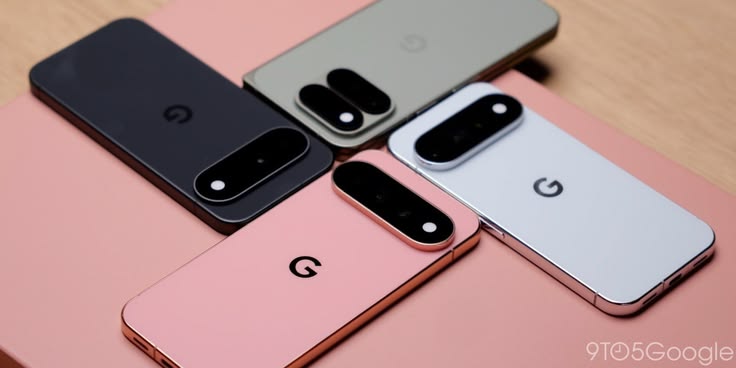
Google has expanded its hardware lineup with the launch of the Pixel 11 smartphone family and Pixel Watch 5, placing artificial intelligence at the centre of its latest attempt to compete in the premium consumer technology market.
The Pixel 11 range includes four devices: the standard Pixel 11, Pixel 11 Pro, Pixel 11 Pro XL and Pixel 11 Pro Fold. The lineup brings updated cameras, improved durability and deeper integration with Google’s Gemini AI capabilities.
Google’s strategy with the new generation is clear.
Smartphones are becoming increasingly difficult to differentiate purely through traditional hardware specifications.
Most premium devices already offer powerful processors, high-quality displays and advanced cameras.
The next battleground is increasingly software intelligence.
Google is using the Pixel 11 series to demonstrate what happens when artificial intelligence is built more deeply into the device.
The new phones include a range of Gemini Intelligence features designed to help users interact with their devices and manage information more naturally.
AI is also being used across photography and creative tools, including features designed to help users work with images and video.
The Pixel 11 series also introduces improvements to display technology, durability and wireless charging.
However, early reviews suggest that the biggest changes are not necessarily found in raw processing power. The new Tensor G6 chip brings improvements, but Google appears to be betting more heavily on AI features and the overall software experience than on benchmark performance alone.
Alongside the smartphones, Google introduced the Pixel Watch 5.
The smartwatch has been positioned as another major platform for Gemini Intelligence, while also expanding health and fitness capabilities.
Google says the device includes more accurate GPS tracking and new health-focused features, continuing the wider trend of consumer technology companies turning wearable devices into increasingly sophisticated personal monitoring tools.
The Pixel Watch 5 is also part of a larger shift in Google’s hardware strategy.
The company no longer appears to be treating smartphones, watches and other devices as separate products.
Instead, AI is increasingly becoming the layer connecting them.
A user’s phone may understand context from their messages, calendar and apps.
A watch may understand health and activity information.
AI could potentially connect that information and provide assistance across devices.
That vision is becoming increasingly common throughout the technology industry.
Apple, Samsung and other major hardware companies are all attempting to integrate AI more deeply into their products.
But Google has one major advantage: artificial intelligence has already become central to many of its existing services.
Gemini can potentially connect with the wider Google ecosystem, including search, productivity tools and other digital services.
The challenge will be convincing consumers that those AI capabilities are useful enough to justify upgrading their devices.
The premium smartphone market has reached a point where many consumers keep their phones for several years.
New cameras and slightly faster processors may not always be enough to convince someone to upgrade.
AI is becoming one of the industry’s answers to that problem.
Companies are hoping that smarter devices will feel significantly different from older ones, even when the physical hardware changes are relatively modest.
Google’s latest Pixel generation is therefore more than a smartphone launch.
It is another test of whether consumers are ready to make AI a major part of their everyday relationship with technology.
The hardware still matters.
Battery life still matters.
Cameras still matter.
But the companies winning the next generation of consumer technology may be the ones that can make all those things work more intelligently together.