Quantum computing has spent years living between scientific promise and commercial reality.
The technology is often described as the future of computing.
But for much of its development, that future has remained difficult to define.
Quantum computers can perform calculations differently from traditional machines, but proving that they can solve genuinely useful real-world problems has been one of the industry’s biggest challenges.
New research involving quantum computing, artificial intelligence and nuclear fusion may offer another indication of where practical value could emerge.
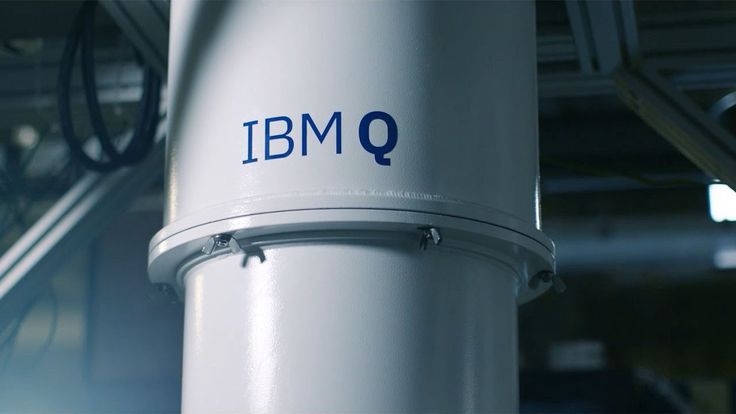
Scientists working with IBM and Oak Ridge National Laboratory have used a hybrid system combining quantum computing and classical supercomputing to study complex chemistry connected to the production of tritium, an important fuel for future fusion reactors.
The work is significant because it focuses on one of the areas where quantum computers may eventually provide their greatest advantage: simulation.
Traditional computers are extraordinarily powerful.
But simulating the behaviour of complex molecules and materials can become extremely difficult because nature itself operates according to quantum rules.
A quantum computer could potentially model certain quantum systems more naturally than a conventional machine.
That does not mean quantum computers will replace laptops or smartphones.
The future of quantum computing is likely to involve specialised systems working alongside classical computers and artificial intelligence.
A traditional supercomputer may handle large amounts of data.
AI may identify useful patterns.
A quantum processor could be used for a specific calculation that is particularly difficult for classical machines.
The research involving tritium demonstrates this hybrid approach.
Scientists used quantum computing to help model the complex behaviour of a material that could potentially play an important role in producing tritium for fusion energy systems.
Tritium is a rare form of hydrogen and could become an important fuel source for certain fusion reactor designs.
However, producing and managing enough of it remains one of the major challenges facing the fusion industry.
If scientists can better understand the materials involved, they may be able to design more effective systems.
That is where quantum computing could contribute.
Rather than being useful because it can solve every problem faster, quantum computing may become valuable because it can help solve specific problems that are otherwise extremely difficult to model.
A recent scientific review of quantum computing applications made a similar argument.
The researchers noted that the key challenge is not simply increasing the number of qubits.
The technology must demonstrate meaningful improvements in areas such as chemistry, materials science and biochemistry.
This is an important distinction.
For years, quantum companies have competed over technical milestones.
How many qubits can a machine support?
How long can a quantum state remain stable?
How effectively can errors be corrected?
Those questions still matter.
But the ultimate test is usefulness.
Can quantum computing help discover a better battery material?
Can it help design new medicines?
Can it help scientists understand complex chemical reactions?
Can it help solve problems connected to energy or climate change?
The answers may determine which quantum technologies eventually become commercially important.
The research involving fusion materials is particularly exciting because it connects several future technologies at once.
Quantum computing is being used alongside AI.
The scientific problem is connected to fusion energy.
And the research relies on advanced supercomputing infrastructure.
This kind of technological convergence may become increasingly common.
The future may not belong to one revolutionary technology operating alone.
It may belong to systems where several emerging technologies work together.
Quantum computing may become one of the most powerful examples.
The technology still has enormous challenges ahead.
Useful large-scale quantum computers are not sitting on ordinary desks.
The industry remains expensive and technically demanding.
But the focus is beginning to change.
Scientists are moving from asking whether quantum computers are theoretically powerful to asking where they can actually make a difference.
That question could finally bring quantum computing closer to the real world.