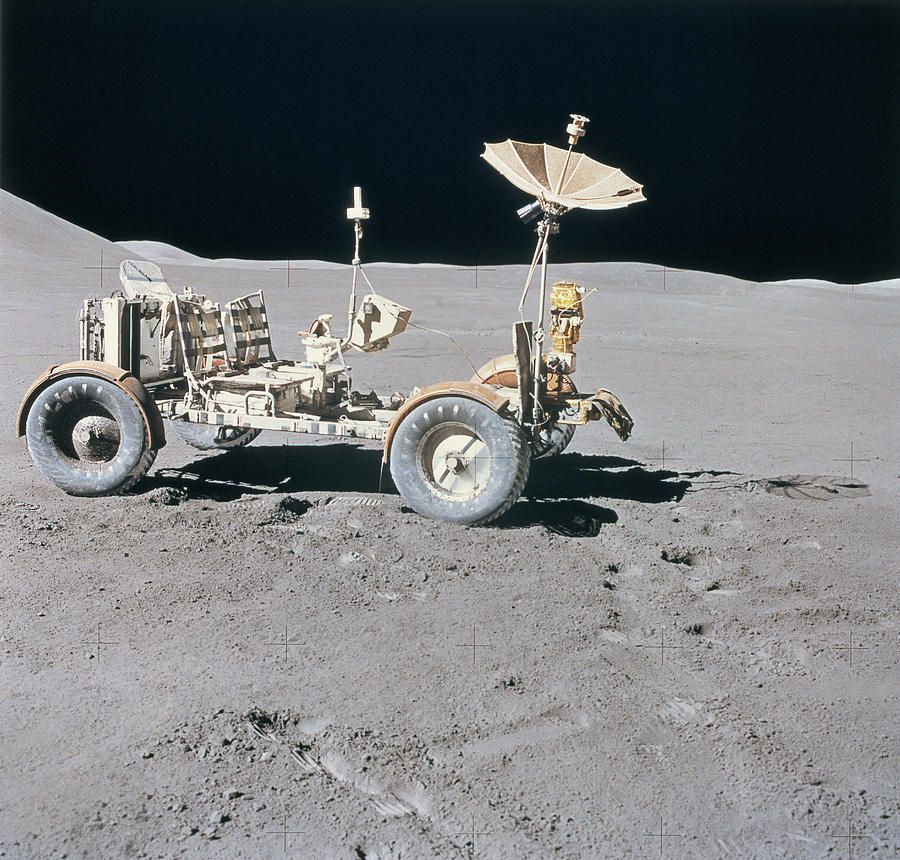
Nvidia’s AI technology is heading somewhere few computer chips have gone before: the Moon.
Space robotics company Lunar Outpost has announced a collaboration with Nvidia that will bring the company’s Jetson computing platform to upcoming lunar missions.
The technology is expected to support autonomous navigation, data processing, terrain mapping and other tasks that need to be carried out far away from Earth.
The first planned mission will use Nvidia Jetson technology to help control a lunar rover’s lidar system and process information collected by its sensors.
That could make the system one of the first GPU-powered computing platforms to operate directly on the lunar surface.
For artificial intelligence, the development is particularly interesting because it represents the growing importance of what is known as edge AI.
Instead of sending every piece of information back to a distant data centre for processing, edge AI allows computing to happen closer to where the data is being generated.
On Earth, that approach can be useful for autonomous vehicles, robots and industrial systems.
On the Moon, it could be essential.
Communication between Earth and lunar missions has limitations. Sending large volumes of raw information back to Earth takes time and consumes valuable bandwidth.
An intelligent system capable of processing sensor data locally could allow a rover to make faster decisions about where to move and what information is important.
Future Lunar Outpost missions are expected to use increasingly capable Nvidia hardware for tasks including autonomous path planning, real-time terrain mapping and communications.
The collaboration also points towards a much bigger future for AI beyond Earth.
Robotic systems are likely to play a central role in future lunar exploration, particularly as governments and private companies work towards more regular missions.
The further those systems operate from human control, the more important onboard intelligence becomes.
A rover exploring the Moon cannot always wait for a human operator on Earth to tell it what to do next.
It needs some ability to understand its surroundings and respond.
That is where AI computing becomes valuable.
Nvidia is already at the centre of the global race to build AI infrastructure on Earth. Its chips power many of the data centres used to train and run advanced AI models.
Now, its technology is being prepared for a very different environment.
The Moon may not become an AI computing hub anytime soon.
But Nvidia’s latest collaboration shows that the reach of artificial intelligence is expanding far beyond offices, smartphones and data centres.
The next frontier for AI computing could literally be beyond Earth.