For years, the UK has been one of the strongest startup ecosystems in Europe.
London remains a major destination for founders and investors, while cities such as Manchester, Cambridge, Bristol and Edinburgh have continued to develop their own technology communities. But the startup conversation in 2026 is becoming less about simply creating the next big app.
The money is still there.
The competition is still there.
But investors are becoming more selective about where they place their bets.
Data from Tech.eu shows that UK startups raised a combined €19 billion in the first half of 2026, across more than 400 funding rounds, keeping the UK at the top of the European startup funding landscape.
That is a strong signal.
However, the numbers also reveal something important about the current startup environment: capital is increasingly concentrating around companies and sectors that investors believe can scale significantly.
AI Is Pulling Attention and Money
It is difficult to talk about startups in 2026 without talking about artificial intelligence.
AI companies are attracting enormous levels of investment, particularly businesses working on infrastructure, specialised software and the hardware needed to power increasingly demanding AI systems.
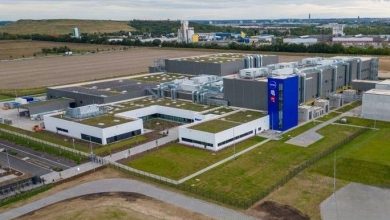
Earlier this month, the UK government announced investment from its Sovereign AI programme into British AI chip company OLIX, which is developing next-generation chips designed for AI computing.
The company’s rise reflects a wider shift in the startup ecosystem.
A few years ago, building a consumer-facing app could be enough to attract significant attention. Today, investors are increasingly interested in companies building the infrastructure behind major technological changes.
That includes:
- AI infrastructure
- Semiconductor technology
- Cybersecurity
- Robotics
- Climate technology
- Defence technology
- Advanced software
The startups receiving the most attention are often trying to solve bigger and more complex problems.
That also means they require more capital.
The Rise of Bigger Startup Bets
The UK startup scene has always produced companies capable of raising significant funding.
But recent activity suggests that investors are becoming increasingly comfortable placing very large bets on companies they believe have the potential to dominate emerging markets.
At the same time, this can create a more difficult environment for smaller founders.
When a handful of companies attract a large percentage of available investment, early-stage businesses may have to work harder to stand out.
A good idea alone is rarely enough anymore.
Founders increasingly need to demonstrate:
- A clear market
- A strong team
- A realistic business model
- Evidence of demand
- A convincing reason why their technology matters
In other words, startup culture may still celebrate ambition, but investors are becoming more interested in execution.
Britain’s Startup Success Is Spreading Beyond London
London remains the centre of the UK’s startup economy, but one of the more interesting developments has been the growth of technology communities outside the capital.
According to recent analysis from HSBC Innovation Banking, successful UK technology companies are increasingly producing what could be described as “founder factories” — environments where former employees go on to build their own companies, using the experience, networks and knowledge gained from previous startups.
This effect is becoming visible across cities including Edinburgh, Bristol, Cambridge, York and Manchester.
That matters because a healthy startup ecosystem is not built around one successful company.
It is built around what happens afterwards.
Employees learn how companies grow.
They build professional networks.
They understand how fundraising works.
And eventually, some of them leave to build something themselves.
The success of one company can therefore create opportunities for dozens of others.
The Startup Definition Is Expanding
Another interesting change is the kind of companies now being described as technology startups.
Technology is no longer a separate industry sitting beside everything else.
It is increasingly becoming part of every industry.
A modern startup could be building:
- AI systems for healthcare
- Software for manufacturing
- Technology for renewable energy
- Digital tools for financial services
- Advanced robotics
- Agricultural technology
- Defence systems
This means the next generation of major UK startups may not necessarily look like the companies that dominated the previous decade.
They may be harder to understand.
They may require specialised technical knowledge.
And some may spend years building products before the public ever hears about them.
But their potential impact could be much larger.
Founders Are Also Facing a Different Reality
Building a startup has always been difficult.
But the current technology environment creates new challenges.
AI is moving quickly.
Competition is increasingly global.
Customers expect faster products and better experiences.
And investors have more opportunities than ever to choose from.
For founders, this means speed matters—but so does focus.
The companies most likely to survive may not be the ones trying to do everything.
They may be the ones that understand one important problem extremely well.
That could be one of the biggest lessons from the current UK startup environment.
Technology is creating more opportunities.
But it is also making the competition much more serious.
The Next Generation Is Already Being Built
Despite the challenges, there is little evidence that Britain’s startup ecosystem is slowing down.
The UK remains Europe’s largest technology funding market, with software continuing to attract significant investment and new companies continuing to emerge across different regions and sectors.
The next generation of successful companies may already be operating quietly in shared offices, university laboratories and small teams across the country.
Some will fail.
Most probably will.
That has always been part of startup culture.
But a few of them could become the companies that produce the next generation of founders.
And that is perhaps the most important sign of a healthy technology ecosystem.
The best startups do not only create successful companies. Sometimes, they create the people who go on to build the next ones.