The global smartphone market is facing a new challenge that has little to do with consumer demand: a growing shortage of memory chips.
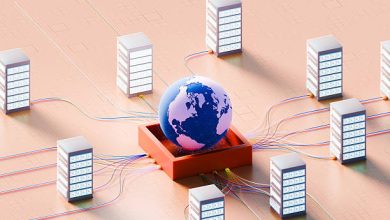
The problem is being driven partly by the rapid expansion of artificial intelligence infrastructure, which is consuming enormous amounts of advanced memory. As manufacturers prioritise the more profitable AI market, smartphone makers are being forced to compete for the same limited supply of memory components.
The effects are already becoming visible in consumer electronics prices.
Apple’s latest iPhone launches have arrived at a particularly interesting moment. The company introduced the iPhone 18 family and its first foldable model, the iPhone Duo, with the latter starting at $1,999. Analysts and technology publications have linked some of the recent price pressure across consumer hardware to the increasingly expensive memory supply chain.
AI Is Changing the Memory Market
Modern AI systems require enormous amounts of memory.
Large language models and other AI applications rely heavily on high-bandwidth memory, or HBM, which allows processors to access huge quantities of data extremely quickly. The explosion in demand for AI data centres has therefore changed the economics of the memory industry.
Memory manufacturers have strong incentives to allocate capacity toward AI infrastructure because those customers are willing to pay premium prices and sign large, long-term contracts.
That creates a difficult situation for consumer electronics manufacturers.
Smartphones, laptops and other devices also require DRAM and flash storage, but they may now be competing with AI infrastructure projects for manufacturing capacity.
According to recent reporting, smartphone DRAM prices have risen dramatically over the past year, while manufacturers continue to struggle to expand production quickly enough. Building new semiconductor facilities can take several years, meaning supply cannot simply be increased whenever demand suddenly rises.
Why Consumers Should Care
Memory chips are not the most visible component of a smartphone, but they influence almost everything about the device.
RAM affects how many applications a phone can keep open and how smoothly it handles demanding workloads. Storage affects how much data, photographs, video and applications users can keep on their devices.
When component costs rise, manufacturers have several options.
They can absorb the additional expense, reduce margins, change specifications or increase retail prices.
The latest smartphone market suggests manufacturers are increasingly choosing some combination of the latter options.
Apple’s new premium devices are particularly significant because the company is positioning them as increasingly sophisticated computing platforms rather than simple communication devices. The foldable iPhone Duo, for example, is designed to provide a much larger working area when opened and supports features that bring it closer to a pocket-sized computer.
The AI Boom Could Affect Ordinary Electronics
The situation demonstrates one of the less obvious consequences of the AI boom.
AI is not only changing software.
It is reshaping the semiconductor supply chain.
The same infrastructure needed to power AI models requires advanced processors, memory, networking equipment and enormous amounts of electricity. As investment continues, suppliers naturally prioritise areas offering the highest returns.
Consumer electronics manufacturers must then compete within that ecosystem.
The result could be a period where smartphones and computers become more expensive even as their basic specifications continue to improve.
What Comes Next?
The memory shortage is unlikely to disappear immediately.
New production capacity is being developed, but semiconductor factories require years of planning and billions of dollars of investment. Meanwhile, demand for AI infrastructure continues to expand.
This could create an unusual situation in which consumers experience higher prices not because people suddenly want more smartphones, but because another technology sector is consuming an increasingly large share of the semiconductor supply chain.
For consumers, that could mean one simple thing: the next upgrade may cost more than expected.
And for technology companies, the lesson is equally clear. The AI revolution is no longer happening in a separate corner of the industry. It is beginning to influence the hardware people use every day.