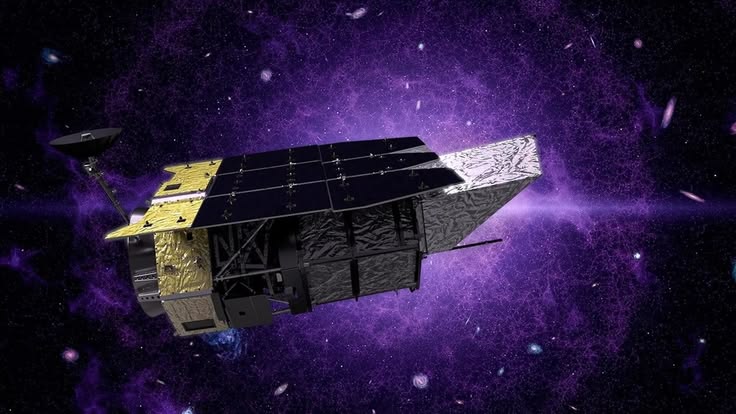
NASA is preparing to launch one of its most ambitious space observatories in years, with the Nancy Grace Roman Space Telescope expected to give scientists an unprecedentedly wide view of the universe.
The telescope is designed to investigate some of the biggest unanswered questions in modern science, including the nature of dark energy, dark matter and the thousands of worlds that may exist beyond our Solar System.
What makes Roman particularly significant is its ability to combine high-resolution observations with an exceptionally wide field of view.
NASA’s new observatory will be capable of capturing images with a field of view around 100 times larger than the Hubble Space Telescope while maintaining similar sharpness. That could allow scientists to study enormous areas of the universe much faster than existing space telescopes.
The mission represents another major step in humanity’s attempt to understand a universe that remains filled with mysteries.
Scientists know that the ordinary matter visible in stars, planets and galaxies represents only a relatively small part of the universe.
Dark matter, which cannot be directly observed, is believed to influence the movement and structure of galaxies through gravity.
Dark energy is even more mysterious.
Scientists believe it may be responsible for the accelerating expansion of the universe, but its true nature remains unknown.
Roman could help scientists collect the enormous amounts of data needed to better understand both.
One of the telescope’s major scientific programmes will involve studying the way light from distant galaxies is distorted as it travels through space.
This phenomenon, known as gravitational lensing, can help scientists map the invisible distribution of matter throughout the universe.
Roman will also observe large numbers of exploding stars known as supernovae.
These observations could help researchers study how the universe has expanded over time and investigate why that expansion appears to be accelerating.
But Roman will not only be looking at the deepest parts of the cosmos.
The telescope is also expected to make major contributions to the search for exoplanets.
Astronomers have already discovered thousands of planets orbiting stars beyond the Sun.
Roman’s observations could help identify huge numbers of additional worlds, including planets that may be difficult for other telescopes to detect.
The telescope will work alongside other major space observatories rather than replacing them.
The James Webb Space Telescope is particularly powerful when studying individual objects in extraordinary detail.
Roman, by contrast, will allow scientists to survey much larger regions of the sky.
Together, those different capabilities could give astronomers a more complete understanding of the universe.
One telescope might discover something unusual.
Another could then examine it more closely.
This combination of wide surveys and detailed observation could become increasingly important as astronomy enters an era of enormous scientific datasets.
Roman is also a reminder that the future of science increasingly depends on powerful instruments capable of observing things that humans cannot see directly.
Dark matter cannot simply be photographed.
Distant planets cannot be visited.
Scientists instead have to collect tiny signals from across the universe and use physics, mathematics and technology to understand what those signals mean.
The better the instruments become, the more humanity can see.
And history suggests that every major improvement in scientific observation eventually leads to surprises.
When Galileo first turned a telescope towards the sky, he discovered that the universe was far more complicated than many people had imagined.
When Hubble began observing distant galaxies, it transformed humanity’s understanding of cosmic history.
The James Webb Space Telescope has already revealed extraordinary new details about the early universe.
Roman could be next.
Its mission will officially focus on questions scientists already know they want to answer.
But some of its most important discoveries may involve questions nobody has thought to ask yet.
That is often how science works.
Humanity builds a new way of looking.
And then discovers something it never expected to see.